
Insulin resistance in perimenopause: why your body may feel different—and what can help
If your body seems to be responding differently in your 40s—perhaps with more weight around your middle, lower energy, or changing cholesterol or blood pressure—you are not alone. Perimenopause can affect much more than the menstrual cycle. Shifting hormone levels can also influence muscle, body composition, sleep, mood and the way the body responds to insulin.
These changes are not evidence that your body has suddenly stopped working. They are signals that your physiology is changing, and that the health strategies that worked in an earlier stage of life may need to change too.
What does insulin do?
Insulin is a hormone made by the pancreas that helps regulate blood sugar. When carbohydrates are digested, glucose enters the bloodstream. Insulin acts like a messenger, helping glucose move into cells where it can be used for energy or stored for later.
When cells respond well to insulin, the body can keep blood sugar within a healthy range and use energy efficiently.
What is insulin resistance?
Insulin resistance develops when muscle, liver and fat cells become less responsive to insulin. The pancreas compensates by producing more of it. For some time, this extra insulin may keep blood glucose in the normal range—which means insulin resistance can be developing before prediabetes or type 2 diabetes is identified.
In other words, a normal blood sugar result does not always tell the whole story about insulin sensitivity.
Why can perimenopause affect insulin sensitivity?
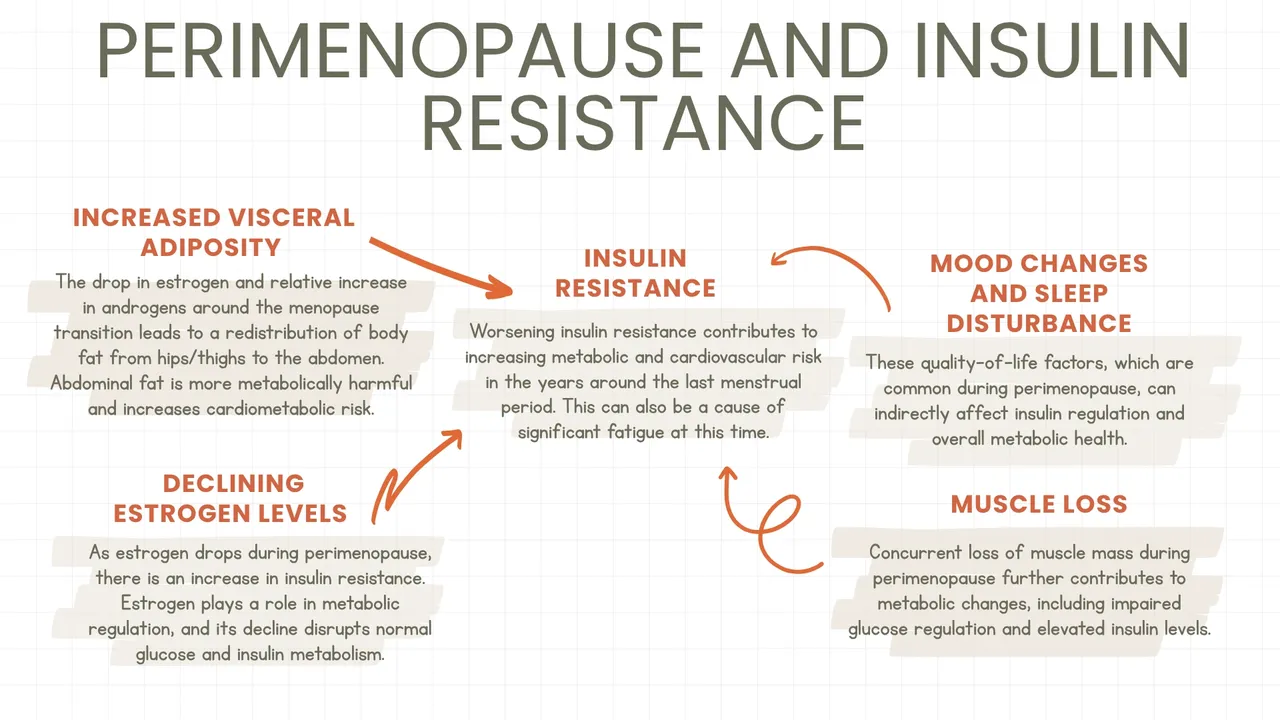
Several changes can happen at the same time during the menopause transition. Together, they may increase the likelihood of insulin resistance and affect long-term metabolic and cardiovascular health.
1. Estrogen levels fluctuate and decline
Estrogen plays a role in glucose and insulin regulation. As estrogen fluctuates and eventually declines in the years leading to the final menstrual period, insulin sensitivity may decrease—even when eating and activity habits have not changed significantly.
2. Body fat distribution can shift
During perimenopause, some people notice more fat accumulating around the waist even if their overall weight changes very little. Fat stored around the abdominal organs, known as visceral fat, is more strongly associated with insulin resistance, cardiovascular disease and type 2 diabetes than fat stored around the hips and thighs.
This is one reason measures such as waist circumference or waist-to-height ratio can sometimes add useful information alongside body weight.
3. Muscle mass can gradually decline
Skeletal muscle is one of the body’s largest sites for glucose uptake. When muscle mass declines, the body may become less efficient at clearing glucose from the bloodstream.
The encouraging part is that muscle remains adaptable. Progressive resistance exercise can help preserve or build muscle and support insulin sensitivity. At Zenith, this may include an appropriately paced return to strength work through Pilates or an individualized movement plan, depending on your health, experience and goals.
4. Sleep and mood can affect everyday habits
Night sweats, insomnia, anxiety or low mood can make it much harder to prepare nourishing meals, stay active and maintain routines that once felt manageable. Fatigue may increase reliance on convenience foods and reduce the energy available for movement.
This is not simply a matter of willpower. Hormonal and physiological changes can influence behaviour, while disrupted sleep, mood changes and metabolic health can reinforce one another. Effective care should consider the whole pattern rather than treating one symptom in isolation.
Possible signs of insulin resistance
Insulin resistance often has no obvious symptoms in its early stages. When signs are present, they may include:
- Increasing waist circumference or abdominal fat
- Difficulty maintaining or losing weight
- Persistent fatigue or low energy
- Elevated blood pressure
- High triglycerides or low HDL cholesterol
- Rising fasting glucose or prediabetes
- Increased risk of metabolic dysfunction-associated steatotic liver disease (fatty liver disease)
These findings are not specific to insulin resistance and can have other causes. They are clues that a broader assessment may be worthwhile—not a diagnosis on their own.
Does insulin resistance cause weight gain?
Weight is influenced by many factors, including food intake, physical activity, sleep, stress, medication, genetics, aging and hormonal change. Insulin resistance does not cause weight gain in isolation.
However, persistently elevated insulin may make weight management more challenging. Fatigue can also make it harder to stay active, prepare meals and maintain other supportive habits. For many people, the answer is not more restriction or self-criticism; it is understanding what has changed and choosing strategies that fit their current physiology and capacity.
How is insulin resistance assessed?
Fasting glucose and HbA1c may remain within range while the pancreas is producing more insulin to maintain those results. Assessment may therefore involve reviewing several markers together, alongside symptoms, health history, medications and other risk factors.
Depending on the individual, Dr. Jessie may consider laboratory information such as:
- Fasting glucose
- Fasting insulin
- A cholesterol panel
- Other relevant markers, which may include liver enzymes or high-sensitivity C-reactive protein (hs-CRP)
Laboratory findings should always be interpreted in the context of the whole person. Testing and treatment recommendations are individualized and may involve coordination with your family doctor or other healthcare professionals.
A practical, integrated approach
Supporting metabolic health during perimenopause may involve nutrition, sleep, stress support, appropriately prescribed movement and, when indicated, further medical assessment. The most useful starting point will differ from person to person.
Zenith’s integrated setting makes it possible to connect internal health with movement and strength. Naturopathic care can help explore hormonal and metabolic contributors, while Pilates and other clinical services may support a safe, sustainable return to activity when appropriate.
The takeaway
Perimenopause brings meaningful hormonal and metabolic changes. Declining estrogen, shifts in fat distribution, loss of muscle, disrupted sleep and mood changes can all influence insulin sensitivity and long-term cardiometabolic health.
These changes are common, but they do not have to be dismissed as an inevitable part of getting older. Identifying the factors that matter for you can help shape a realistic plan to support energy, strength and long-term health.
Written by Dr. Jessie Short, ND, and adapted for Zenith Physio Pilates with permission from her original article, “Insulin Resistance in Perimenopause.”
This article is for general educational purposes and is not a substitute for individualized medical advice, diagnosis or treatment. Speak with an appropriate healthcare professional about your circumstances.