
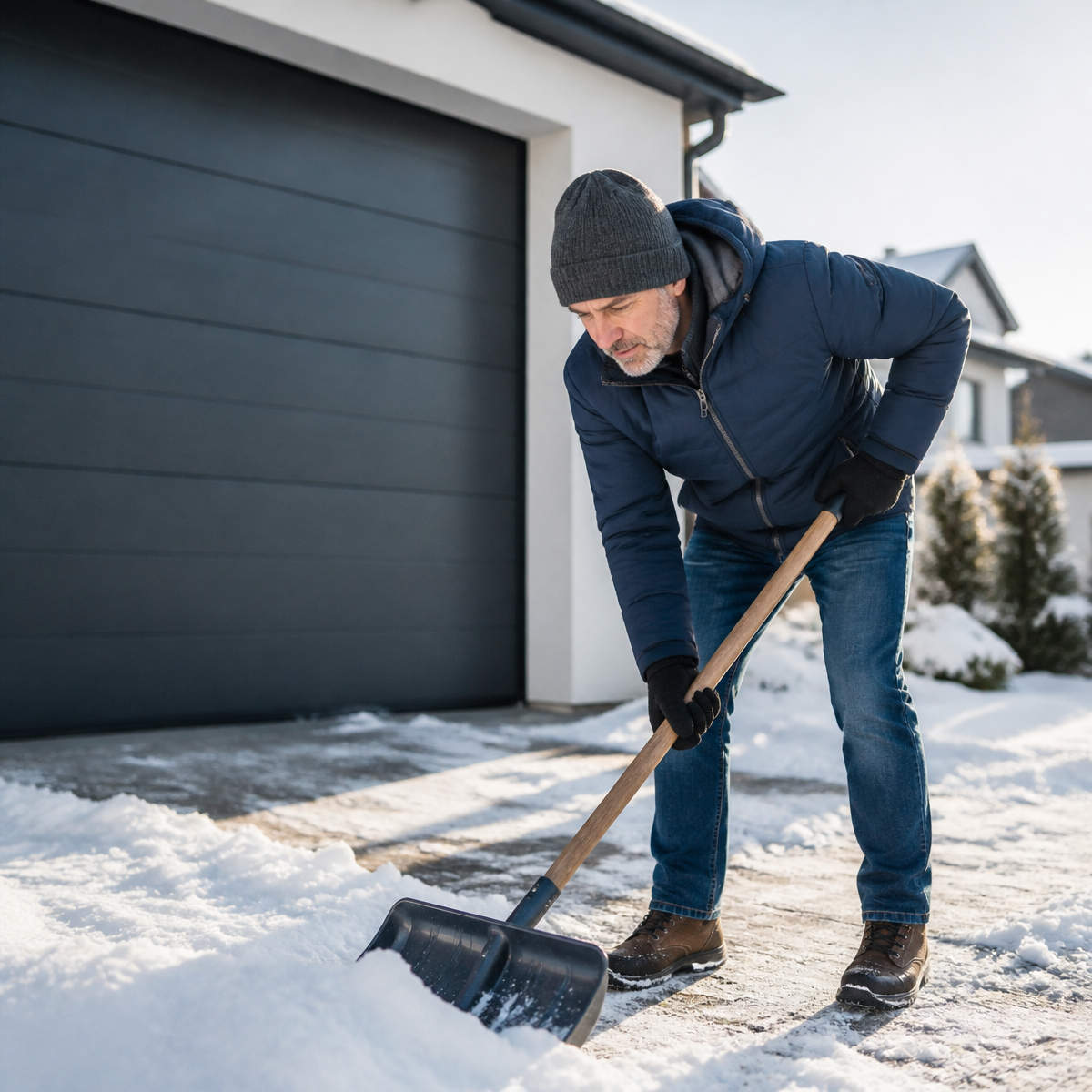
How to prepare your back and joints for winter shovelling
By early November, many households are already thinking about the first snowfall and the work that comes with it. Snow shovelling asks a lot from the spine, hips, shoulders, and wrists, especially if your body has been less active through the cooler months. If you want to prepare, the best place to start is before the snow arrives, not after the first heavy storm.
Why This Happens
Shovelling is not just “lifting snow.” It combines bending, twisting, pushing, and repetitive gripping. That makes it a full-body task, and it can expose stiffness, tightness or weakness that stayed hidden during a quieter fall season when many people move less. Shorter days, cooler temperatures, and more time indoors usually mean less walking, less stretching, and fewer chances to use the spine through a full range of motion causing the body to take longer to “warm up” when you start activity. A few simple steps now can improve how your joints move, reduce strain, and make the work feel more manageable.
Shovelling adds another layer of challenge because it asks the body to do several things at once. The lower back has to stay steady while the hips and knees bend. The shoulders and upper back must lift and guide the shovel. The core helps control rotation as you move snow to the side. If one part of that chain is stiff or weak, another area often does extra work. The issue is usually not one single movement, but a pattern of limited mobility and sudden workload.
Common Causes
Several factors can make winter shovelling harder on the joints:
- Reduced activity in late fall — less regular movement can make the spine and hips feel tight.
- Tight hip flexors and hamstrings — these can limit bending and make the low back work harder.
- Stiff thoracic spine — if the upper back does not rotate well, the neck and low back often compensate.
- Weak trunk endurance — shovelling is repetitive, so endurance matters as much as strength.
- Poor lifting mechanics — twisting with a loaded shovel can stress the back more than turning the whole body.
- Cold muscles — tissues tend to feel less flexible until they are gradually warmed up.
There is also the simple reality of winter timing. Many people shovel early in the morning, in a rush, before work or school. That means less preparation and more risk of moving too quickly. Even a healthy spine can be irritated when workload rises suddenly.
How Chiropractic Services Can Help
Chiropractic care focuses on how the spine and joints are moving, not just where pain is felt. During an assessment, a chiropractor may look at posture, joint mobility, how you bend and rotate, and whether certain areas are moving less than they should. That can help identify why winter tasks feel harder on one side or in one region of the body.
Depending on the assessment, chiropractic treatment may include conservative manual care, advice on movement strategies, and exercises to support mobility and control. The goal is not to make every joint move more; it is to improve the way your body shares load during activity.
For winter shovelling, that may mean:
- improving thoracic rotation so the upper back moves better
- reducing stiffness through the hips and lower back
- reviewing how to hinge at the hips instead of rounding through the spine
- practising safer turning patterns so you are not twisting under load
- suggesting simple warm-up drills before outdoor work
Useful Home Strategies
- Warm up first. Walk indoors for a few minutes, march on the spot, or do gentle trunk rotations before going out.
- Use smaller shovelfuls. Lighter loads reduce strain on the back and shoulders.
- Keep snow close. Holding the shovel closer to your body reduces leverage on the spine.
- Turn your feet. Step and pivot rather than twisting sharply through the low back.
- Switch sides. Alternate leading hands and directions when possible.
- Pace the job. Short breaks are better than pushing through until everything tightens up.
If you already know that one side of your back or hip feels stiffer, it is worth addressing that before winter sets in fully. The earlier you improve movement options, the less likely you are to overload the same painful area every time it snows.
When to Seek Professional Help
Some muscle soreness after shovelling can be normal, especially if you were less active beforehand. But ongoing pain, repeated flare-ups, or symptoms that interfere with daily tasks deserve a closer look.
Further assessment is appropriate if you notice:
- pain that keeps returning after each snowfall
- stiffness that lasts most of the day
- pain that travels into the buttock, leg, shoulder, or arm
- difficulty bending, turning, or reaching overhead
- weakness, numbness, or tingling
- pain that is affecting sleep, work, or household tasks
Severe pain after a slip or fall should be checked promptly. If symptoms are getting worse rather than settling, that is another sign that the problem may be more than simple soreness.
Frequently Asked Questions
Why do I feel stiff before I even start shovelling?
Cold weather, reduced activity, and time spent sitting can all make joints feel less mobile. The spine and hips often need a gradual warm-up before they are ready for a repetitive job like shovelling.
Is it better to push snow or lift it?
Whenever possible, pushing light snow is usually easier than repeatedly lifting heavy loads. If you do need to lift, keep the shovel load small and avoid twisting while it is full.
Should I keep exercising in winter if shovelling is making me sore?
In most cases, gentle movement is still helpful. Walking, light mobility work, and controlled trunk exercises can support circulation and joint motion. The key is to avoid sudden overexertion and to adapt the activity if pain is sharp or increasing.
What can I do at home to prepare my back and hips?
Simple daily mobility work can help. Try hip hinges, gentle trunk rotations, bodyweight squats to a comfortable depth, and short walks. Consistency matters more than doing a large workout once in a while.
Conclusion
Preparing for winter shovelling starts with better joint mobility, better movement habits, and a realistic pace. When the spine, hips, and shoulders are moving well, the body is usually better able to handle the repeated bending, lifting, and turning that snow removal requires. A few minutes of preparation now can make a meaningful difference once the first snowfall arrives.
If your symptoms are affecting your daily routine, movement, sleep, work, or activity level, booking an appointment is a practical next step.