
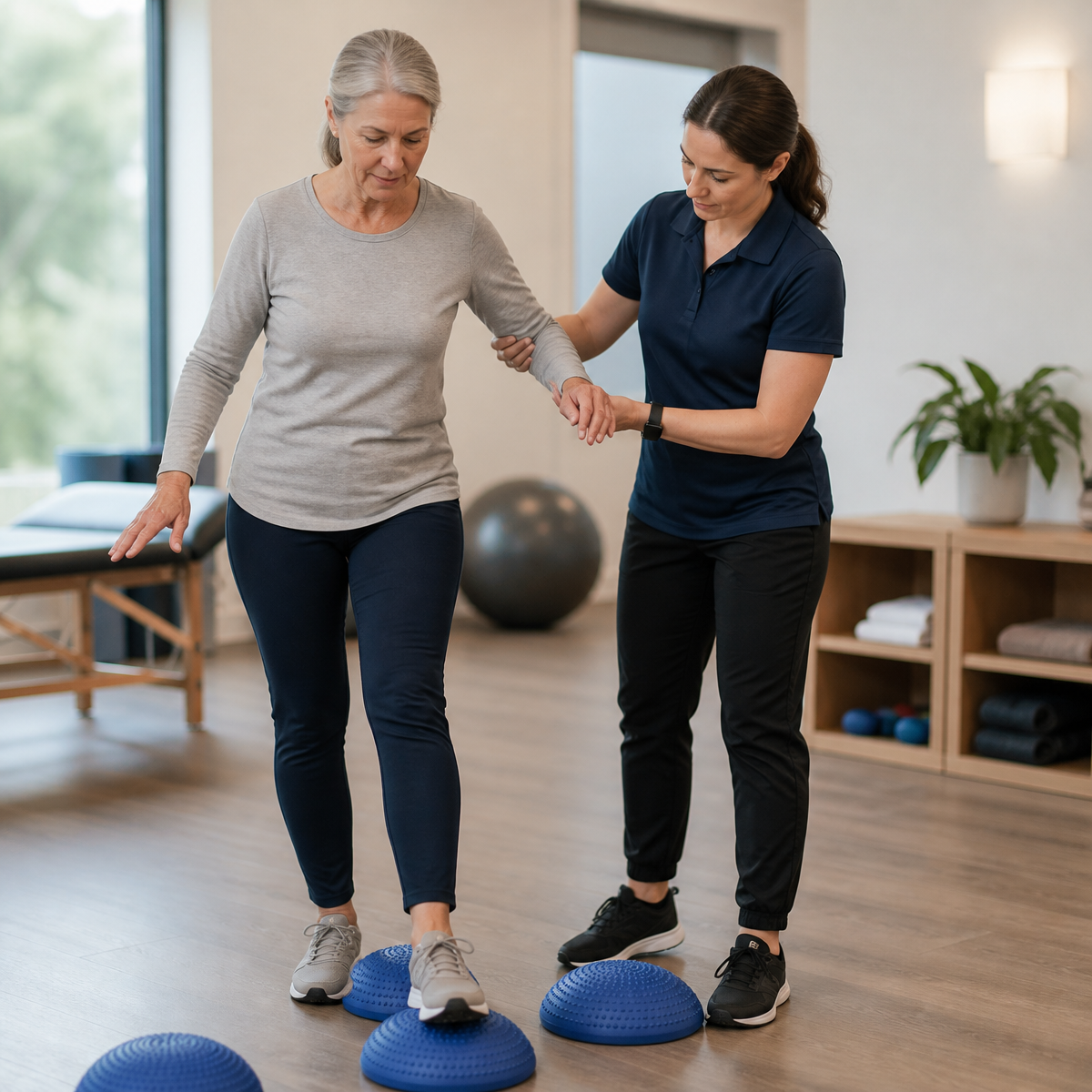
Balance check: how adults 50 plus can reduce trip risk
Many adults notice a small but important change as they age: walking feels a little less steady, especially outdoors on damp leaves, uneven sidewalks, or during dimmer evenings. A balance check can help identify why trips and missteps are becoming more likely and what can be done about it before winter adds ice, snow, and slower reaction time into the mix.
For adults 50 and over, balance changes are not always dramatic. Often, the issue is a combination of reduced ankle strength and foot flexibility, slower stepping reactions, tighter hips, and less confident vision in low light. Physiotherapy can assess these movement patterns and help reduce trip risk with practical exercises and safer movement strategies.
Why This Happens
Balance is not controlled by one system alone. It depends on how the eyes, inner ear, joints, muscles, and brain work together. When one part is less efficient, the body has to work harder to stay steady.
As we get older, a few changes are common:
- leg muscles may lose strength, especially around the ankles and hips
- reaction time may slow slightly, so it takes longer to catch balance after a misstep
- joint stiffness can make it harder to adapt to uneven ground
- vision changes can make dim light or glare more challenging
- previous pain or injury may lead to careful, guarded walking mechanics
Balance issues often gradually become more noticeable. A small stumble that would have been easy to correct when we were younger can feel much more risky now.
Common Causes
From a physiotherapy point of view, trip risk is often linked to movement quality rather than one single medical problem. Common contributors include:
- Reduced ankle mobility: If the ankle does not move well, the foot may not clear the ground as easily.
- Weak foot and leg muscles: Low strength in the calves, thighs, and glutes can reduce control during walking and stair use.
- Poor single-leg balance: Walking is a series of single-leg steps. If standing on one leg feels unstable, trip risk can increase.
- Shorter stride length: Some people start taking shuffling steps without realizing it, which can make the feet catch more easily.
- Carrying and multitasking: Looking at a phone, carrying bags, or talking while walking reduces attention to the ground ahead.
- Pain or stiffness: Knee, hip, back, or foot discomfort can change gait and make movement less efficient.
- Old injuries: can diminish the sensitivity of receptors in the feet, ankles, and joints and impair awareness of joint position and movement.
Sometimes the issue is not balance in the classic sense, but confidence. If someone has had a previous fall or near-fall, they may tighten up and walk more cautiously. That can actually reduce normal sway control and make movements less smooth.
How Physiotherapy Can Help
A physiotherapy assessment for fall risk looks at more than just standing on one foot. It usually includes walking pattern, lower-limb strength, ankle mobility, turning, sit-to-stand control, and how the body responds to changes in speed or direction. The goal is to understand where the movement breakdown is happening.
Treatment may include:
- Balance exercises: starting with supported weight shifts, tandem stance, or one-leg loading as appropriate
- Strength work: exercises for calves, thighs, glutes, and core muscles that support upright posture and stepping control
- Gait training: improving step length, foot clearance, and turning mechanics
- Mobility work: restoring ankle, hip, or spine movement when stiffness is limiting balance
- Functional practice: rehearsal of stairs, curbs, carrying items, or getting up from chairs safely
The right progression matters. Too little challenge does not build balance, but too much too soon can be frustrating or unsafe. Physiotherapy helps match the exercises to the person’s current ability and daily needs.
When to Seek Professional Help
A fall balance check is worth considering if you have noticed any of the following:
- more frequent tripping or catching your foot on rugs, curbs, or uneven ground
- feeling unsteady when turning, stepping backward, or getting up quickly
- difficulty walking in low light or on wet surfaces
- fear of falling that is changing how you move or where you go
- recent changes after illness, injury, surgery, or a long period of reduced activity
- pain, stiffness, numbness, or weakness that is affecting walking
Urgent medical attention is important if balance problems come on suddenly, are paired with dizziness, fainting, chest pain, new numbness, speech changes, or weakness on one side of the body. Those symptoms need prompt assessment.
Frequently Asked Questions
Is it normal to feel a little less steady after age 50?
Some change in balance, strength, and reaction speed is common with age, but it should not be ignored. If you are tripping often or changing how you walk to avoid falling, that is a sign to look more closely at what is going on.
Can poor balance be improved with exercise?
Yes, in many cases. Balance improves when strength, mobility, and coordination are trained together. The best exercises are the ones that are specific enough to challenge the body but still safe and manageable.
Should I stop walking if I’m worried about tripping?
Usually no. Walking remains important, but it may need to be adjusted. Safer routes, better footwear, more lighting, and slower turns can help. Avoiding activity completely often leads to more stiffness and weaker muscles, which can worsen balance over time.
Conclusion
A balance check is a practical way to reduce trip risk and falls. For adults 50 plus, the main factors are often strength, mobility, and movement habits rather than age alone. Small changes in how you walk, turn, and step can make a real difference.
A useful starting point is to notice where you feel least steady: stairs, curbs, turning, or walking in the dark. That information helps guide the right exercises and safety strategies.
If your symptoms are persistent, getting worse, or starting to limit your daily activities, a physiotherapy assessment can help clarify what is contributing and what to work on next.