
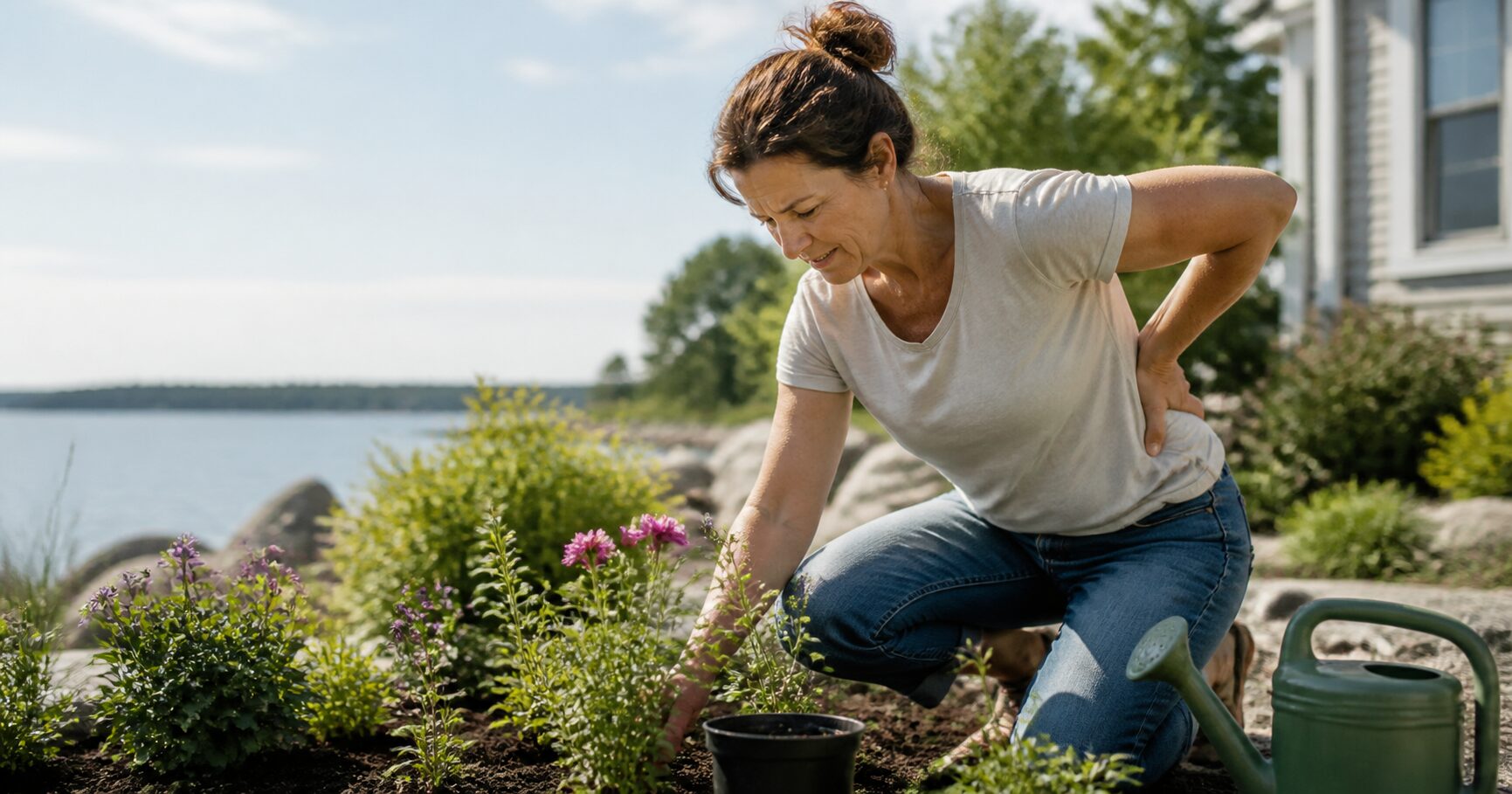
Summer gardening aches on the South Shore and when osteopathy may help
Summer is a busy time for gardening, and it often shows up in the body fast. Reaching, kneeling, lifting bags of soil, carrying watering cans, and spending long periods bent forward can irritate the low back, hips, neck, and shoulders. For many people, the first sign is a stiff morning, a sharp twinge when standing up, or aching that lingers after a few hours outside. Osteopathy for gardening back pain may help when discomfort is tied to movement patterns, joint stiffness, or overload from repeated tasks.
On the South Shore, summer usually means more outdoor work, more time at cottages or in the yard, and more activity overall. That increase is healthy, but it also means the tissues that usually tolerate day-to-day movement can get pushed past their usual limits. Understanding why the pain starts is often the first step in managing it well.
Why This Happens
Gardening asks a lot of the spine and pelvis. Bending forward repeatedly increases load through the low back. Twisting while lifting can add stress to the joints and muscles around the waist. Prolonged kneeling or crouching can tighten the hips and make it harder for the pelvis and low back to move smoothly.
When one area becomes stiff, the body often compensates somewhere else. For example, if the hips are not moving well, the low back may do extra work. If the upper back is stiff, the neck may take on more strain when looking down at plants or tools. Pain is often less about one single movement and more about a pattern of repeated strain.
Heat, dehydration, and fatigue can also make muscle tension and soreness worse. During a long gardening day, people may notice that the first hour feels fine, but by late afternoon the back feels locked up or tender.
Common Causes
Some of the most common reasons for summer gardening aches include:
- Repeated bending over beds, pots, or raised planters
- Lifting heavy items such as soil, mulch, rocks, or watering cans
- Twisting while carrying tools or turning to place materials
- Long periods in one position, especially kneeling or crouching
- Weakness or fatigue in the glutes, trunk, or upper back muscles
- Pre-existing stiffness in the hips, thoracic spine, or ankles
- Guarding after a previous back strain, which can change how you move
It is also common for symptoms to feel worse later in the day. That does not always mean the problem is serious. It often means the tissues have been loaded more than they can comfortably handle at that time.
Another common issue is doing too much after a quieter winter or early spring. Even if gardening feels like light work, the total load can add up quickly when hours pass without enough breaks.
How Osteopathy Can Help
Osteopathy takes a close look at how the whole body is moving, not just the painful area. For gardening-related back pain, that usually means assessing the low back, pelvis, hips, ribs, and sometimes the neck and shoulders as well. The goal is to understand where movement is restricted, where muscles are overworking, and how the body is compensating.
Depending on the assessment, osteopathic treatment may use gentle hands-on techniques to improve joint mobility, reduce muscular tension, and support easier movement through the spine and pelvis. This can be helpful when stiffness is making everyday tasks, such as bending to pull weeds or lifting planters, more uncomfortable than they should be.
Education is also a key part of care. That may include showing you how to change the way you bend, kneel, or lift so the same area is not doing all the work. Small changes often matter more than people expect.
Practical strategies may include:
- Breaking gardening into shorter blocks instead of one long session
- Alternating between kneeling, standing, and sitting on a stool
- Keeping heavier items close to the body when lifting
- Using hips and knees more, rather than hinging only through the low back
- Drinking water regularly, especially on warm days
- Doing a few gentle mobility exercises before and after yard work
A simple tip is to test your tolerance before a full gardening day. A short walk, some hip circles, or a few bodyweight squats can help the body feel less stiff before the first load of the day.
When to Seek Professional Help
Some soreness after gardening is common and settles within a day or two. Further assessment is more appropriate when pain keeps returning, lasts longer than expected, or starts limiting normal tasks such as walking, sleeping, bending, or getting out of a chair.
It is also worth having the area assessed if you notice:
- Pain that shoots into the buttock, leg, or foot
- Repeated back “catching” or locking
- Neck pain with headaches after time in the garden
- Weakness, numbness, or tingling
- Pain after a slip, fall, or sudden twist
- Symptoms that are steadily worsening despite rest and pacing
Most gardening-related aches are mechanical and respond well to sensible self-care, but persistent or spreading symptoms deserve a closer look.
Frequently Asked Questions
Why does my back hurt more after gardening than during it?
During activity, your body is busy and pain can stay in the background. Once you stop, tissues cool down and the nervous system becomes more aware of the strain. That is why soreness often shows up later in the day or the next morning.
Is it better to rest or keep moving?
Light movement is usually better than complete rest. Short walks, gentle stretching, and changing position often can help reduce stiffness. The key is to avoid long periods of either sitting or gardening without breaks.
What can I do at home to ease the discomfort?
Use heat if the area feels tight, keep moving gently, and avoid heavy lifting for a day or two if symptoms are irritated. Simple mobility work for the hips, low back, and upper back can help. Try not to stay bent forward for long stretches.
Should I avoid gardening until it feels better?
Not always. It is often better to scale back rather than stop completely. Shorter sessions, lighter tasks, and more frequent breaks can let you stay active without flare-ups. If one movement clearly triggers pain, modify it rather than pushing through.
Conclusion
Gardening aches in summer usually come from repeated bending, lifting, twisting, and time spent in one position. In many cases, the pain reflects stiffness, overload, or compensation in the way the body is moving. Osteopathy for gardening back pain may help by improving mobility, easing tension, and addressing movement patterns that are making the back work too hard.
A useful takeaway is to pace the work, vary positions, and keep heavy tasks short and deliberate. If symptoms keep returning, are getting worse, or are interfering with sleep or daily activity, it makes sense to have them assessed.
If your symptoms are affecting your daily routine, movement, sleep, work, or activity level, booking an appointment is a practical next step.